The Engine of Derivatives: Understanding the "Something Else"

{{DATE}}

Before we meet the players, we must understand the field. A Derivative is essentially a contract. Its unique characteristic is that it has no intrinsic value of its own; instead, its value is derived from Something Else. 

In the professional world, this Something Else is known as the Underlying Asset. In the Indian context, this typically includes:

  • Stocks: Giants like Reliance or TCS.
  • Commodities: Hard assets like Gold and Silver.
  • Currencies: Pairings like the USD-INR.
  • Indices: The pulse of the nation, such as the Nifty 50 or Bank Nifty.

1. The Hedgers: The 
Risk-Architects. 

Think of Hedging as the Insurance Policy of the financial world. Hedgers aren't in the market to make a quick buck; they are there to protect the wealth they already have. 

The Institutional Shield. Imagine a large Fund Manager in Mumbai managing an equity-oriented portfolio. If they sense a short-term correction or a market fall on the horizon, they don't necessarily want to sell their long-term stock holdings. 

Instead, they sell Index Futures (like Nifty or Bank Nifty). If the market falls, the profit from their Sell position in the futures market offsets the loss in their equity portfolio. 

The Real-World Business Hedge: Consider a gold jewellery shop owner. 
If they anticipate that gold prices will skyrocket in the coming months, it creates a business risk - it becomes more expensive for them to buy inventory. To mitigate this, they participate in Gold Futures. By locking in a price now, they reduce uncertainty and protect their business margins. Core Goal: Reducing Risk and Uncertainty.

2. The Speculators: 
The Liquidity Providers Speculators are often misunderstood, but they are the grease that keeps the market engine from seizing up. While Hedgers want to avoid risk, Speculators are willing to embrace risk in exchange for potential profit. 

Capitalizing on Momentum 
Speculators look at short-term price momentum. They form a view whether the Nifty is going up or down over the next week and take a position to benefit from that movement. 

The Gift of Liquidity: Why are they essential? 

Because they provide Liquidity. When a Hedger wants to buy insurance, there must be someone on the other side willing to take that risk. Speculators provide that counterparty volume, ensuring that Indian financial markets remain deep and efficient. Core Goal: Capturing Profit from Price Momentum. 


3. The Arbitrageurs: The Mismatch-Hunters. 
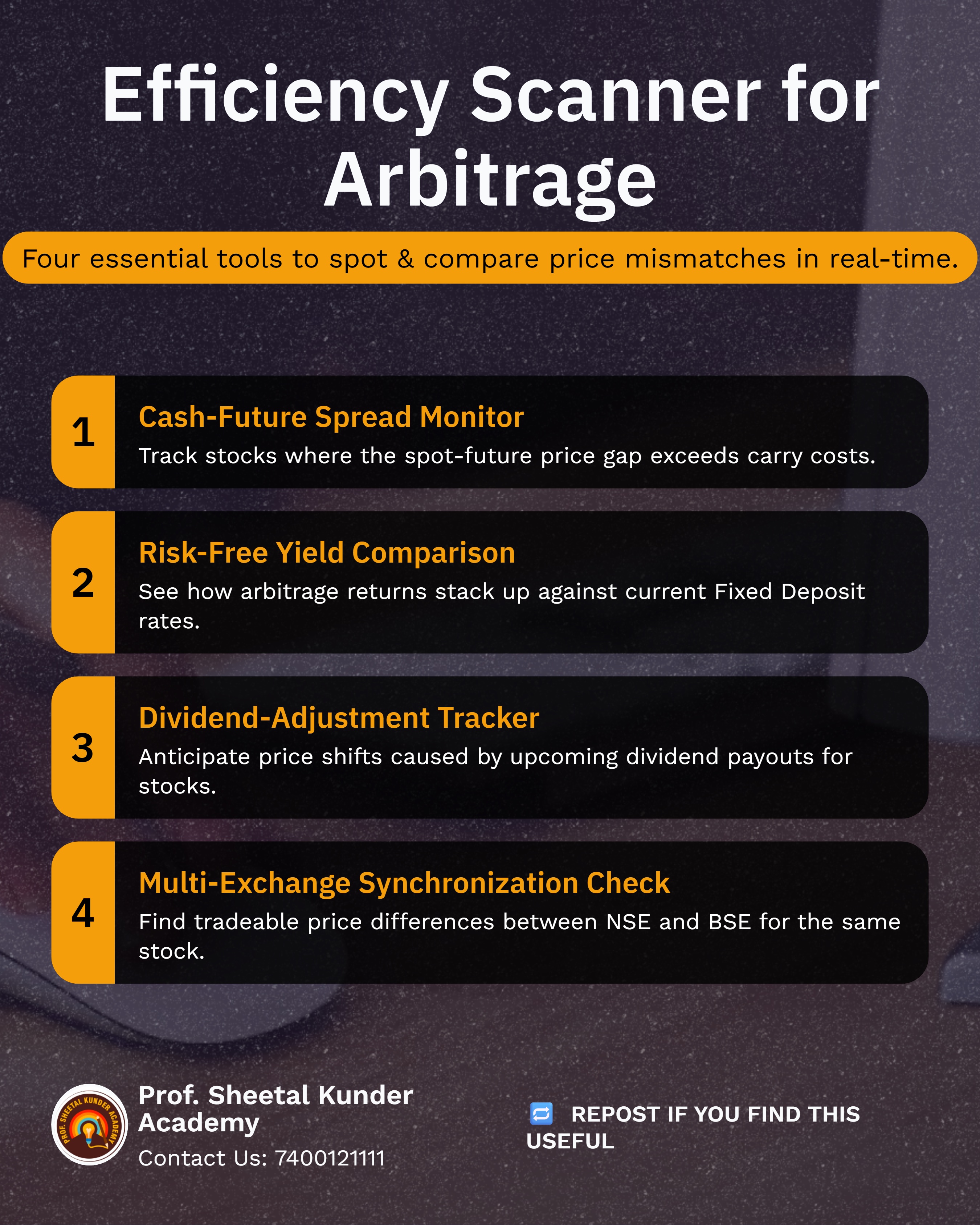
Arbitrageurs are the Detectives of the market. They don't care if the market goes up or down; they only care about Price Mismatches

The Two-Shop Analogy. Imagine a smartphone sold for â‚¹20,000 at Shop A and â‚¹21,000 at Shop B, right across the street. An Arbitrageur would instantly buy the phone from Shop A and sell it in Shop B, pocketing a risk-free ₹1,000 profit. 

Market Synchronisation. In the financial markets, this happens between different segments - for example, the Cash Market (buying the actual stock) vs. the Futures Market. If a stock is trading at ₹500 in cash but the future is at ₹505, the Arbitrageur buys the cash and sells the future. 

This activity eventually forces the prices back into alignment, making the market more efficient for everyone. Core Goal: Profiting from Price Mismatching.
Connecting the Dots: Long-Term Investing & Derivatives. 

A common question we hear is: If I am a long-term SIP investor, why should I care about derivatives?

The answer lies in how your money is managed. Even Safe Mutual Funds use these market participants’ strategies:

  1. Fund Managers as Hedgers: They use Index Futures to protect your SIP gains during volatile weeks.
  2. Arbitrage Funds: There is an entire category of Mutual Funds dedicated solely to the Price Mismatch strategy, providing low-risk returns for conservative investors.
  3. Liquidity Access: Because Speculators are active, your Fund Manager can buy or sell large blocks of stocks for your portfolio without slippage or extreme price impact.


Conclusion: Is the Derivative Market Dangerous?

Derivatives are only dangerous when a Speculator tries to act like a Hedger, or when an investor enters the market without knowing which of the three roles they are playing.

If you use Hedgers to reduce risk, Speculators to capture momentum, and Arbitrageurs to find efficiency, the market becomes a balanced ecosystem. As we move into the next phase of Indian financial growth, understanding these participants is the first step toward becoming a Technically Sound professional.

Prof. Sheetal Kunder

SEBI® Research Analyst. Registration No. INH000013800 M.Com, M.Phil, B.Ed, PGDFM, Teaching Diploma (in Accounting & Finance) from Cambridge International Examination, UK. Various NISM Certification Holders. Ex-BSE Institute Faculty. 18 years of extensive experience in Accounting & Finance. Faculty Development Programs and Management Development Programs at the PAN India level to create awareness about the emerging trends in the Indian Capital Market, and counsel hundreds of students in career choices in the finance area